
Introduction to Kian Persia
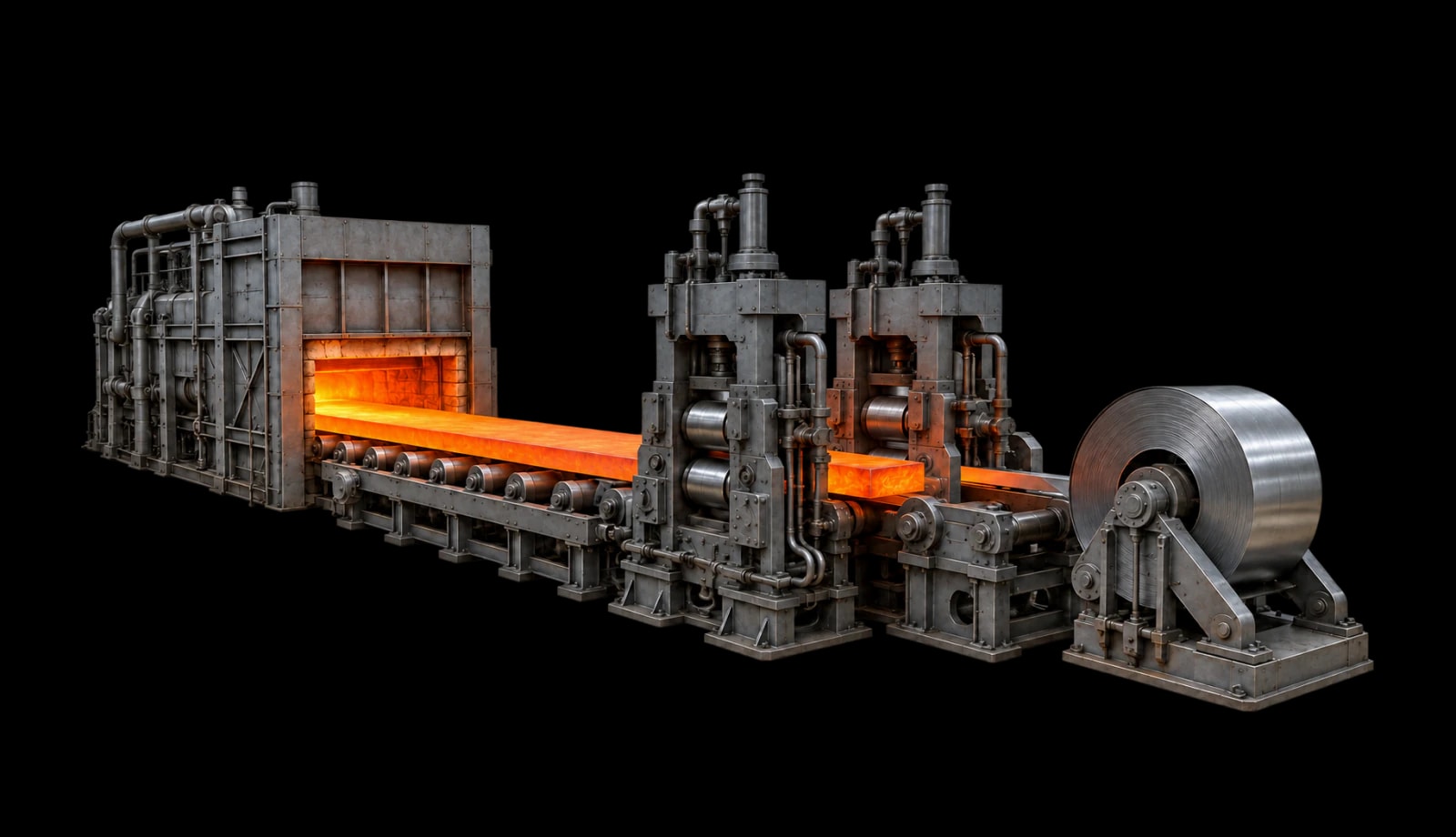
Kian Persia manufactures steel pipe and profile across three main families: structural pipe in every common market size, structural and industrial box sections and profiles, and well casing for drilling and water supply. Alongside these, the plant rolls door-frame profiles — the sections the Iranian market knows as French, Roman and plain frames, described in detail below.
Coil for the line comes from Mobarakeh Steel and Gilan Steel, and the structural sections are produced to the ST37 standard.
Products, Dimensions, and Standards
Box sections and structural profiles. Production covers 10×20 up to 100×100 mm: 10×20, 20×20, 10×25, 25×25, 10×30, 20×30, 30×30, 35×35, 20×40, 30×40, 40×40, 20×50, 25×50, 30×50, 40×50, 50×50, 20×60, 30×60, 40×60, 60×60, 70×70, 40×80, 80×80, 90×90, 40×100, 50×100 and 100×100. Wall thicknesses are 1.8, 2, 2.5 and 3 mm; the 2 mm line runs both Mobarakeh and Gilan coil, the others Mobarakeh only.
Door and window profiles. Profiles 507, 508 and 509 — the standard sash and frame sections for steel doors and windows.
Door frames. Three types are rolled: French, Roman and plain. All three appear in the factory’s production list under the 2 mm Mobarakeh coil. The French frame is the most widely used — a cold-formed section the market sells by the kilogram in a 6.6 m bar. Bar weight is not the same from one maker to the next, so a single figure would be wrong: Markaz-e Ahan lists four 2 mm rows from 24 to 25.3 kg and one 2.5 mm row at 31 kg, Shahin Felez Sepahan gives the same two thicknesses as 26 and 30 kg, and Ahan Online puts a 6 m bar in 2 mm at 23.7 kg. Taken together that is 24 to 26 kg for a 6.6 m bar in 2 mm — near enough 3.6 to 3.9 kg per metre — and 30 to 31 kg in 2.5 mm. Those two thicknesses are what the market trades in this section. The three types differ in section shape and in how they are fitted, not in the steel. These are market reference figures and do not replace confirming the actual weight with the plant.
Sheet. Cut sheet is supplied in a short and a long length.
Structural pipe. Sizes ½, ¾, 1, 1¼, 1½, 2, 2½, 3, 4 and 6 inch, plus the 32 mm pipe. Each size is split by application: industrial, fitting, radiator and gas, with 4 m and 6 m bars in the larger sizes. Thicknesses produced are 2, 2.3, 2.35, 2.4, 2.5, 2.6, 2.8, 2.9, 3, 3.2 and 4 mm, and not every thickness is rolled in every size.
Well casing. Organised by diameter in inches, wall thickness in millimetres and bar length in metres, and offered in six finishes: grade 2, industrial, conical, tested, pump and slotted. Slotted casing is perforated to admit water into the well; conical refers to the tapered end used to join bars.
Buying and Selection Guidance
- Choose the application before the thickness. For structural pipe, the application — industrial, fitting, radiator or gas — determines which thicknesses are rolled at all. Ordering a "1 inch, 2 mm" pipe without naming the application may point at a line that is not in the production plan.
- Name the frame section explicitly. French, Roman and plain frames are not the same price and are not interchangeable; state both the section type and the sheet thickness.
- Confirm the actual weight. Pricing is per kilogram and the real bar weight differs from the theoretical figure. For frames and door profiles, which are bought by the bar, get the bar weight before finalising the order.
- Consider the coil origin. At 2 mm both Mobarakeh and Gilan coil are on the line; if your project specifies the coil source, put it in the order.
- Stock changes daily. The list above is the plant's production range, not live warehouse stock. Check that your exact size, thickness and application combination is available with the sales desk before ordering.
Prices include VAT by default. Each product’s pricing unit is shown in the table.